Posts

Showing posts with the label leadership

Shared Knowledge is Powerful

Image
According to Dictionary.com, “knowledge is power” (attributed to Francis Bacon) means that “the more one knows, the more one will be able to control events.” If we’ve learned anything from COVID-19, it is that shared knowledge is power. From its inception in China, to the spread throughout the United States, information regarding COVID-19 has been dangerously mishandled to say the least. Pertinent questions concerning US preparedness, testing, and PPE remain unanswered. The medical community is still determining the ways that the virus is transmitted, how it presents in the body, how it can be treated/cured, and the resulting ramifications post a negative COVID-19 diagnosis. As we wade through this pandemic, we see firsthand how critical it is that we share knowledge on every level: country, federal, state, local, and to/from and within the medical community; otherwise, barriers to the flow of knowledge can have detrimental outcomes. “Knowledge is power” only when given to people wh...

Don't Get Sidetracked by Squeaky Wheels!

Image
You've heard the adage, “The squeaky wheel gets the oil,” meaning that the loudest people gain the most attention. The complaining shopper gets free credit at a store. The crying sibling gets more sympathy from her parents. The co-worker with the best boasting skills receives the promotion. According to Wolfe J. Rinke, Ph.D., an experienced executive leader, management consultant, professional speaker, and author of Don’t Oil the Squeaky Wheel, it’s time to throw away your oil can. In his book, Rinke notes that if you’re spending more than 5% of your time on trouble makers, you’re messing up. He maintains that if you want your team members to be positive, trusting, turned on, and tuned in, then you must spend the majority of your time with the people who behave that way, and while they are doing that, help you succeed faster. There will always be “squeaky wheels” passionately objecting to change . However, it is important not to allow these detractors to sidetrack the team fr...

The Benefits to Creating a Personal Vision Statement

Image
Each year, individuals sit down with poster board, scissors, and paste in hand to create a vision board – an outward depiction of the things that they aspire to pursue and obtain in their lives in the season ahead.   Similarly, a personal vision statement is a vivid idealized description of a desired outcome that inspires, energizes and helps you create a mental picture of your target. In essence, it is a statement that describes how you see yourself in the future.   A personal vision statement describes your hopes and dreams and evokes a sense of achievement and fulfillment. A personal vision statement is a powerful tool that provokes you to reflect upon your goals to build and shape your dreams.  It differs from a vision board in that a vision board can be very two dimensional; I see it, I like it, I cut it out and put it on a board. But what does the pictures you cut out really mean? Do you really want it or was it an impulse at that moment of time? In this mann...

Consistency is Key

Image
Proverbs 29:18 says, "Where there is no vision, the people perish." This is as true in business as it is in life. Organizations whose leaders have no vision are doomed to work under the burden of mere tradition or to chase ill-conceived illusions of grandeur. They cannot prosper and grow because they are either reduced to keeping things status quo or because they have failed to realistically “count the costs” by vetting all outcomes. Leadership entails, “holding and casting” the vision. “Holding" the vision means taking full accountability for the job of keeping the vision alive. Leaders are charged with inspiring confidence in everyone in the organization at all times. Leaders are charged with the task of “writing the vision and making it plain…” (Habakkuk 2:2). You know it is alive when people are continually excited, inspired and committed to its achievement. If they are stressed, weary, overloaded and resigned, they've lost it. It's a leader’s job to...

Passing the Buck

Image
We’re all familiar with the idiom, “Passing the Buck.”  According to wikipedia.org, buck passing or passing the buck is the action of transferring responsibility or blame onto another person. The expression is said to have originated with the game of poker, in which a marker was used to indicate the person whose turn it was to deal. If the player did not wish to deal he could pass the responsibility by passing the "buck", as the marker came to be called, to the next player. Unfortunately, in today’s climate, it is a common practice to avoid accountability by passing the buck.  Leaders on all levels, should be prepared to take the good with the bad – take the credit when things go as planned and/or organizational goals are achieved and take responsibility for the results when the organization misses the mark for whatever reason.   Accountability is vital. As leaders, we must stop pointing fingers and passing the buck.  The things, good, bad, and indifferent, th...

Write the Vision...

Each year, leaders (i.e. Chairmen, Chief Executive Officers, Executive Directors, Presidents, etc.) in public and private sector reflect on their past year; evaluate relationships; examine areas where time, money, and energy were invested; evaluate whether or not the goals set were reached; and, if not, revise new ones accordingly. This is referred to as Strategic Planning which is an organization’s process of identifying its strategy, or direction, and making decisions on allocating its resources to pursue this strategy, including its capital and people (Wikipedia.com).  Simply stated, it is the process of determining your long-term goals and then identifying the best way to achieve those goals. The State of the Union Address is an example of Strategic Planning.  The President outlines where we’ve been as a country (our nation’s strengths, weaknesses, opportunities, and threats); where we’re going (our goals, key initiatives, reforms, etc.); and how, specifically, their adm...

Conflict is Vital

Image
The New Oxford Dictionary defines conflict as  “a serious disagreement or argument, typically a protracted one”.  The very connotation of conflict is negative, but conflict can actually be good for organizations as it encourages creative, out-of-the box thinking and open-mindedness.  Thus, avoiding the tendency toward groupthink. Whenever you have a group of individuals with different frames of reference, experiences, ideas, and expertise working together, the opportunity for conflict exists.  However, conflict isn't necessarily a bad thing.  Healthy and constructive conflict is a component of high-functioning teams. When people with varying viewpoints and opinions come together, this collaborate effort can provide highly successful results. However, to reconcile their differences, team members must be willing to try new things or to hear and consider new ideas. Conflict, by itself is not destructive, but the way that conflict is handled can be debilitating....

Guidance is Important - Especially in Public Service

Image
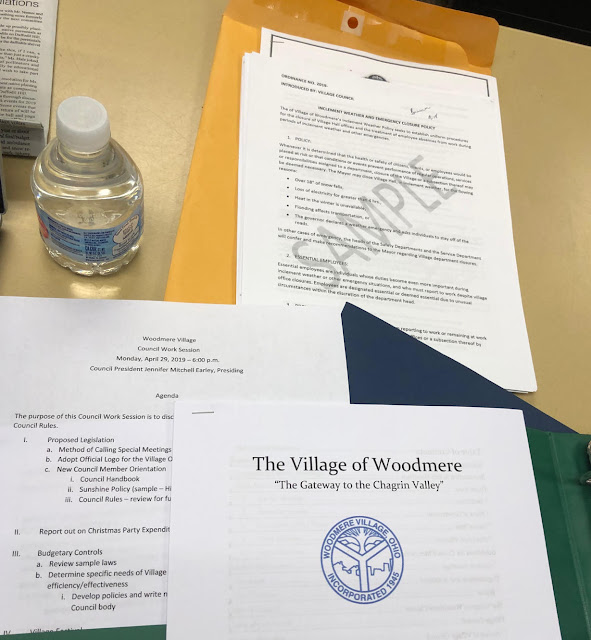
In 1997 as a new Elected Official, I was thankful to have my dad to help me navigate my first four-year term.  My dad’s guidance helped me steer clear of the slippery slopes that entice, entangle, and sometimes envelop novice elected officials... Nearly fourteen years into my career, I truly understand how vital it was to have had the tutelage of my dad.  For many newly elected officials, it’s an exciting yet overwhelming period.  Without having prior political knowledge or the wisdom of a mentor, this begins the “sink or swim” or “trial by fire” season of their political life. As a learning and development consultant with over 20 years of experience designing, developing, and delivering training programs, I can attest to the necessity of providing individuals with the opportunity, encouragement, and tools/training that they need to succeed.  To this end, I developed a handbook to assist Council by documenting acceptable practices and clarifying expectations to help...

Life Lessons - Actions Speak Louder than Words

Image
My mother always told me that “action speaks louder than words”.  Going all in as a leader requires action.  It requires showing up each day, with a positive, steady, appreciative, team-focused attitude and open mind.  The people that you lead and/or serve see through vain repetitions, hollow accolades, and false bravado/humility.  Authenticity cultivates trust - actions speak louder than words. True leaders lead by example. They cultivate an environment where others feel safe and inspired to go all in, because that’s the attitude that they see demonstrated each day.  Positive energy begins with being grateful. Be grateful for the opportunities and the challenges; the contributions made by others, the complimentary strengths of the team as a whole, and the ability to serve others (clients, constituents, customers, etc.). Gratefulness goes a long way as it relates to having a positive outlook and impact on those around you.    hashtag # leadershipmatter...